
Five Players Who Could Become Breakout Stars of FIFA World Cup 2026
The ultimate validation for these five potential breakout stars will unfold when they face the brutal physical realities...
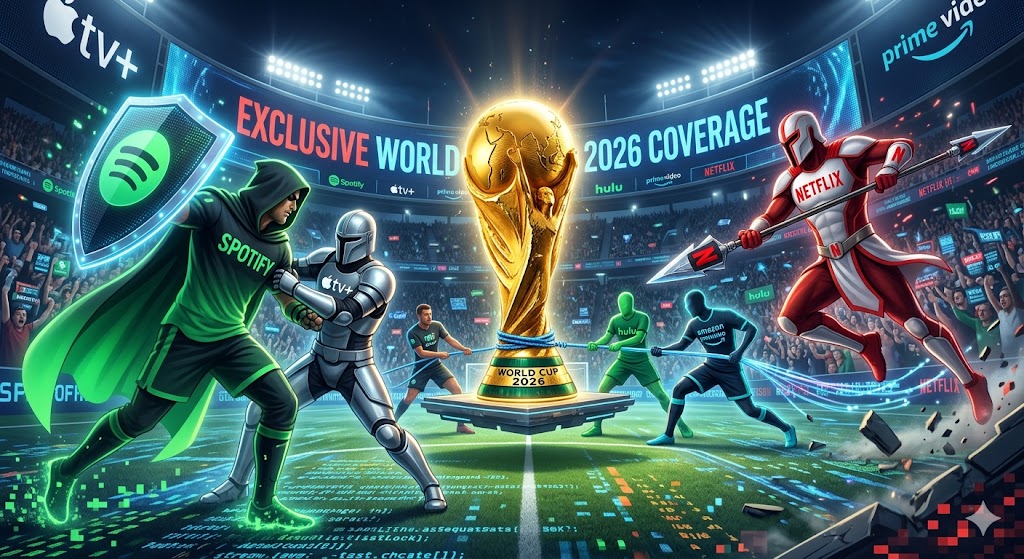
The landscape of global sports broadcasting is undergoing a seismic shift as the world's most prominent digital entities engage in a high-stakes corporate bidding war. With the FIFA World Cup 2026 rapidly approaching, traditional television networks and modern streaming giants are locking horns for exclusive distribution rights. This tournament, hosted across North America, represents the holy grail of live entertainment, offering an unprecedented opportunity to capture hundreds of millions of highly engaged subscribers. Executives from Silicon Valley to Zurich are aggressively negotiating multi-billion dollar packages, fully aware that securing a monopoly on this tournament could permanently rewrite the hierarchy of media consumption.
The sheer scale of the expansion to a 48-team format means there are more matches, more broadcast hours, and more monetization avenues than ever before in football history. Industry analysts report that tech giants are utilizing aggressive packaging strategies to isolate premium knockout-stage fixtures behind exclusive paywalls, disrupting decades of traditional free-to-air broadcasting models. As a result of these restrictive territorial restrictions, independent digital directories like Totalsportek are projecting a massive surge in baseline consumer traffic as fans navigate the increasingly fragmented viewing options. Mainstream providers are attempting to counter this trend by offering heavily integrated, multi-screen interactive features, hoping that highly immersive technological upgrades will justify the rising cost of premium, sport-specific subscription tiers.
The escalating financial demands placed on ordinary consumers are forcing a massive redistribution of how international sports fans choose to access high-profile content. The complex web of regional licensing blackouts means that finding a reliable connection to witness the tournament has become an intricate digital puzzle for casual and die-hard spectators alike. This fragmentation is fueling unprecedented interest in optimized online portals and specialized FIFA World Cup Streams that can circumvent geographic boundaries to unite a global fan base. Streaming platforms are perfectly aware of this competitive digital ecosystem, which is why major networks are investing heavily in server infrastructure and localized language commentary to prevent their paid audiences from migrating to open-web alternatives during crucial opening matches.
While the battle for digital football rights rages in corporate boardrooms, immense athletic drama is unfolding live across major competitive arenas. In domestic collegiate athletics, Georgia put on a spectacular offensive showcase to capture its first-ever SEC Baseball Championship, completely dismantling top-seeded Arkansas 11-1 in a rain-delayed, seven-inning masterpiece in Hoover, Alabama. Up in Omaha, Nebraska, the Big Ten Baseball Championship delivered an absolute classic as UCLA outlasted Oregon 3-2 in an 11-inning marathon, sealing the conference crown after Phoenix Call was hit by a pitch with the bases loaded. Meanwhile, the international tennis community is absorbing a massive shock wave at Roland Garros, where former US Open champion Emma Raducanu suffered a heartbreaking, emotional first-round exit at the French Open after falling to Solana Sierra in Paris.
When the opening whistle finally blows in North America, the real winners of this executive tug-of-war will be judged not just by viewership metrics, but by sustained subscriber retention. The massive financial risks being taken by digital platforms highlight a broader reality: live sports remain the final frontier of monoculture capable of gathering humanity simultaneously. Whichever streaming giant successfully delivers a seamless, high-definition experience without technical failures will likely claim the throne of modern digital entertainment. For the audience, the era of turning on a standard television set is officially drawing to a close, replaced by a brave new world of hyper-competitive streaming.
The ultimate validation for these five potential breakout stars will unfold when they face the brutal physical realities...

In other World Cup news, Group A is already shaping up to be a competitive race, as South Korea matched Mexico's flying ...

The momentum behind digital sports consumption has culminated in historic viewership milestones....

The entertainment lineup for these staggered ceremonies represents a spectacular convergence of global chart-toppers and...

Concurrently, tournament organizers have reinforced strict new regulations for host venues, including an immediate zero-...